
About the Sport
“I get why it’s called Field Gun but why was it Command?”
Well, that comes from the three commands that competed against each other each year. Both Chatham and the Royal Marines have taken part but the 3 commands that have the strongest heritage are Portsmouth (Pompey in blue), Devonport (The Oggies in red) and the Fleet Air Arm (Men of Air in green). So we could all say command and know what we were talking about.
"How is it a sport and not just a military display?"
Once described as the toughest team sport in the world each Command was fiercely competitive. While the athletes were serving sailors their performance was all about winning against the opposition. There were no points for turn out but pride ensured men and equipment were immaculate.
You can characterise the sport like this should you ever need to do so in a court of law:
“A race where teams compete against each other and the clock to complete a course by pushing, pulling, carrying or lifting the gun and limber (the action gear) which may be in phases (actions) and may include obstacles and mechanical aides (walls, chasms and rigging gear) but will include drills to partially disassemble the action gear within the rules and subject to the penalties of the competition.”
What does a crew do?
Intro


Crew No. 4 & 5 - Speedy Wheel
These numbers are characterised by strength and speed to make the pace, whilst carrying a 50kg wheel.


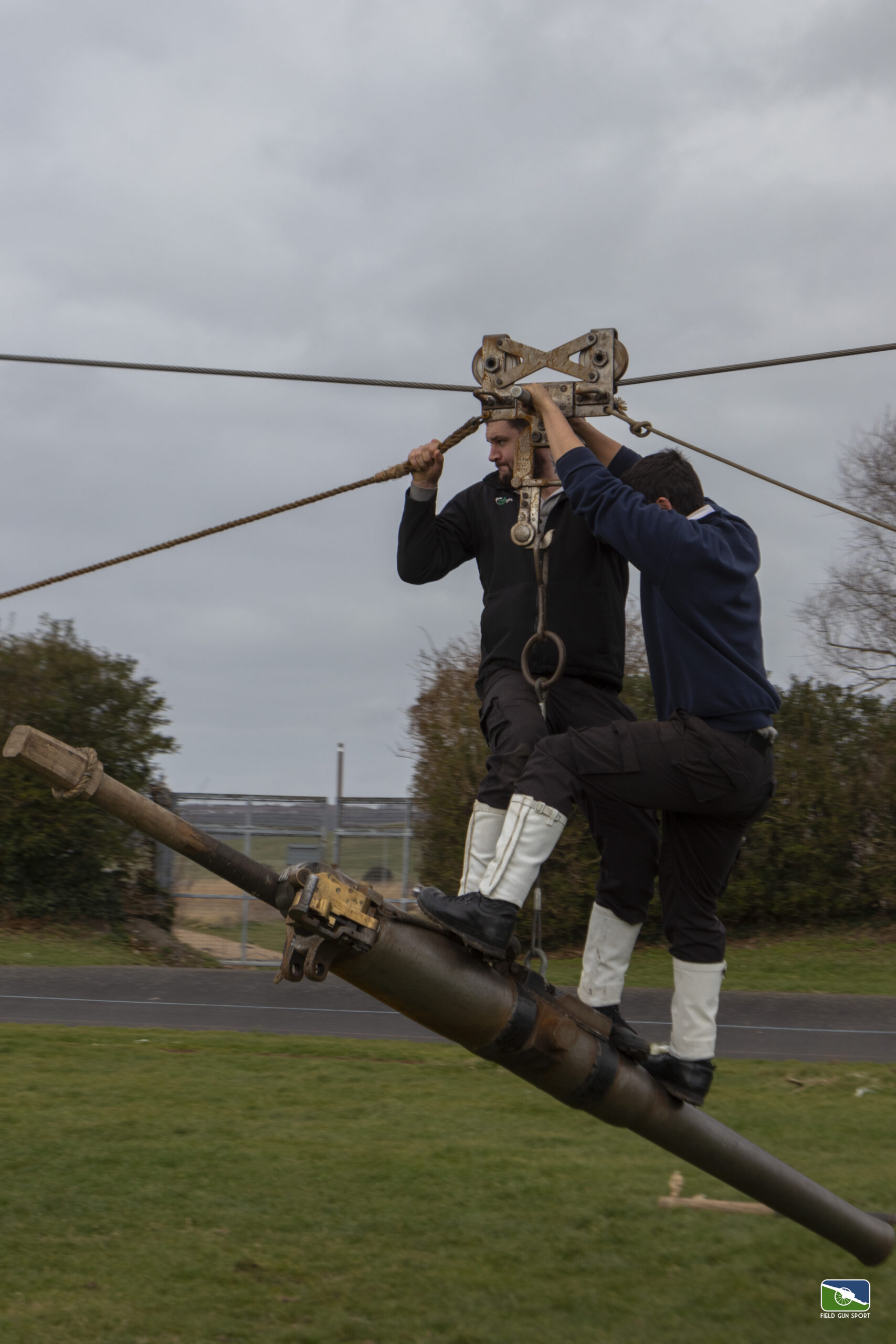


Crew No. 11 - 28'
Excellent hand to eye coordination is required to guide the swings across the chasm.


Crew No. 13 & 14 - Wheel Number
The strength to launch the gun over the wall and then run with the gun wheel.
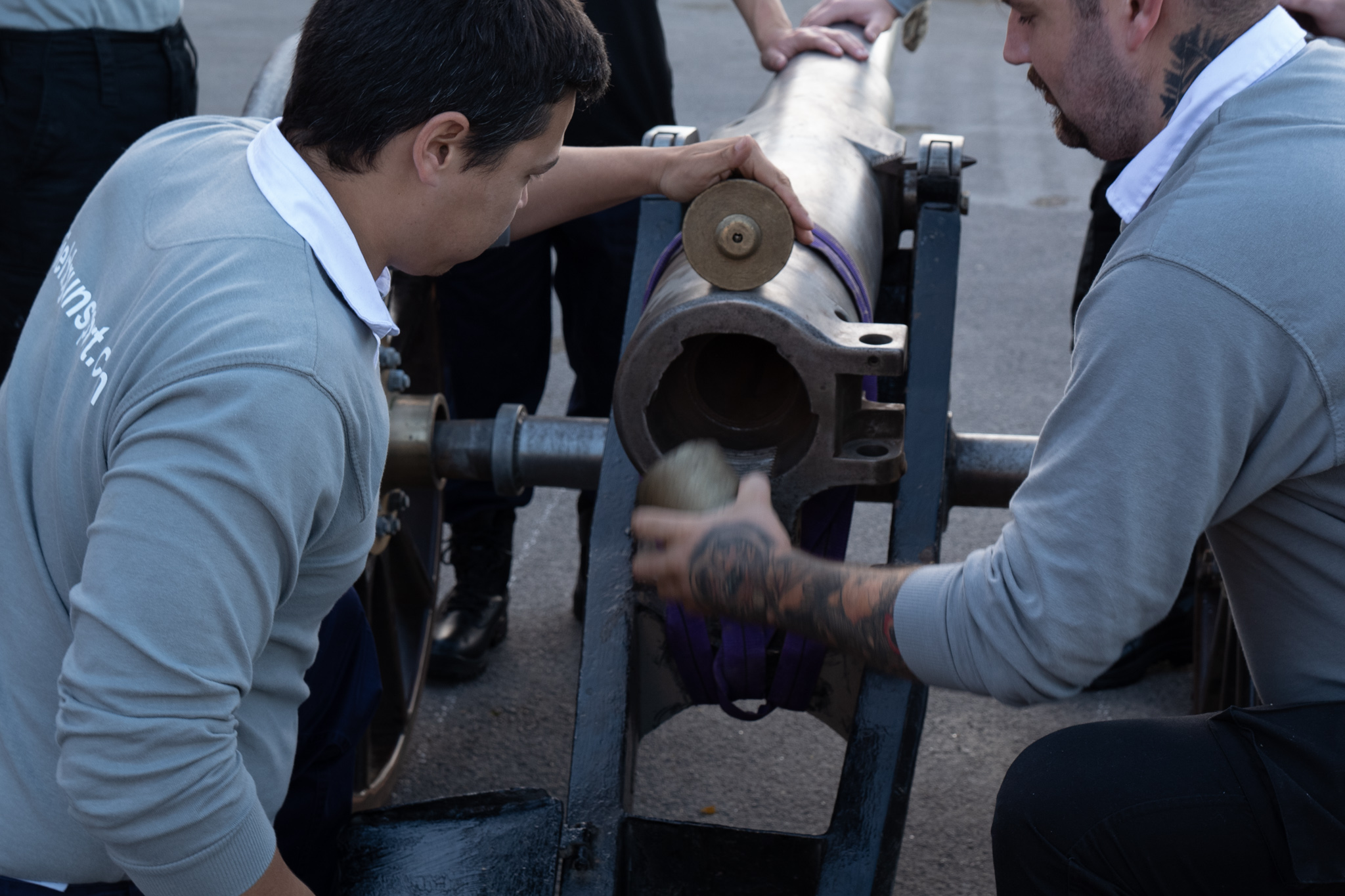

Crew No. 17 & 18 - Heavy End
Drive the gun over the wall from the muzz, One is the brains of the duo, the other is the number 18.
What Goes Into a Run?
Intro
Out
The run out is the longest leg and is started using a military grade firecracker. The crews go down the track, over the wall and on to put the ‘rig’ up, to go across the chasm. The whole team and equipment cross before going through the far wall and into action to fire 3 rounds.
Back
The run back is similar but in reverse and with gravity to assist, the action is over even quicker. Watch for the flying angel as the rig collapses beneath him.